In shortLoose long trousers or a maxi skirt with a sleeved top covers both jobs: shade on an open canal and the temple dress code of covered shoulders and knees. Add slip-on shoes with grip for wet boarding ramps, a brimmed hat, and a packable rain layer any time between 3 May and 28 October.
07:00 to 09:30The useful window at Damnoen Saduak
3 May to 28 OctoberBangkok's wetter season
31 daysAugust days rated muggy
8.5 hoursLength of a tour day
Floating market Bangkok: what to wear on the canal
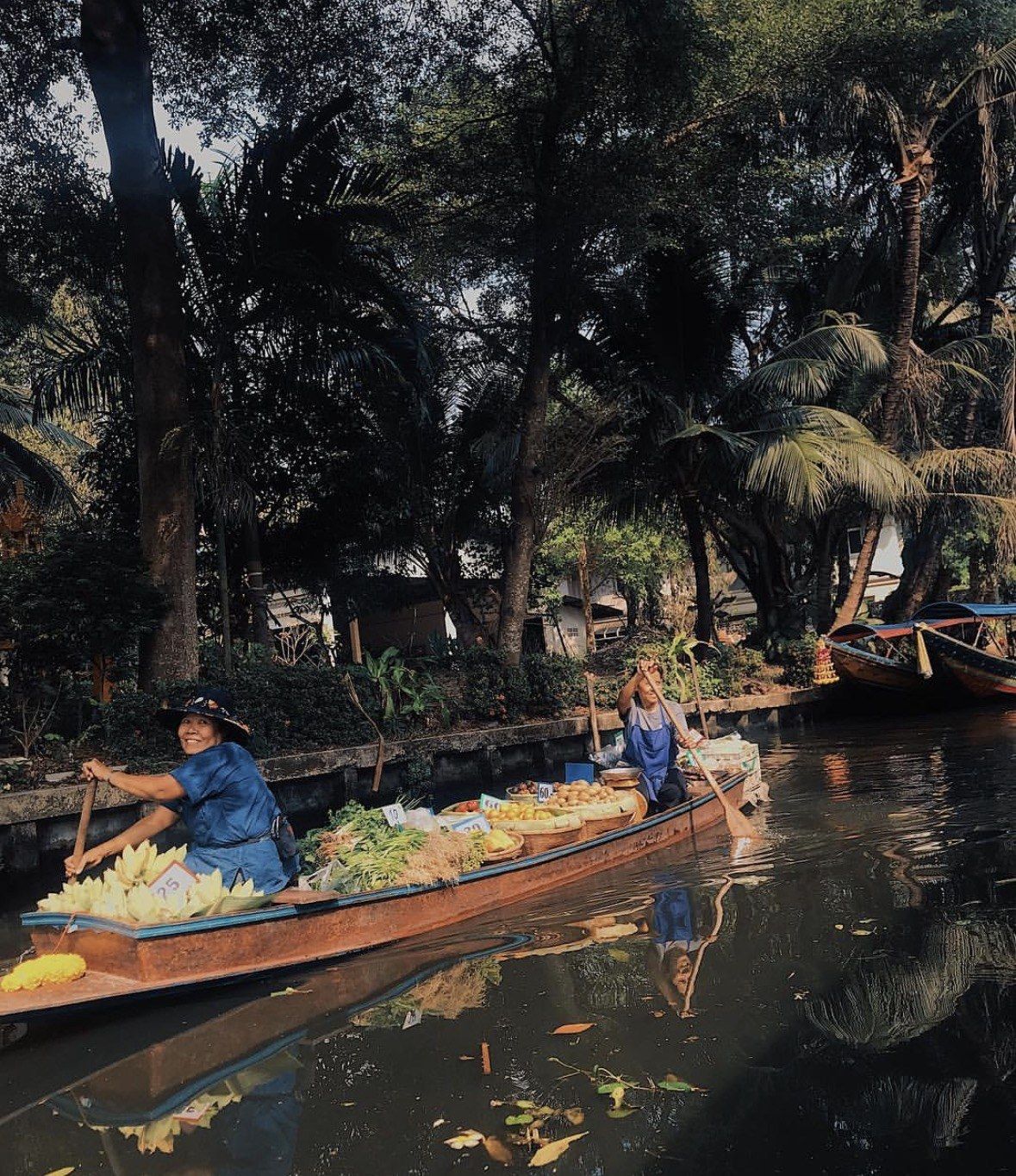
Loose long trousers and a sleeved top are the default at all four markets. They shade you on an open sampan, where nothing stands between you and the sky, and they clear the temple dress code that most itineraries run into by mid-morning. Pick a fabric that dries fast: August is rated muggy or worse on all 31 days, and denim stays wet.
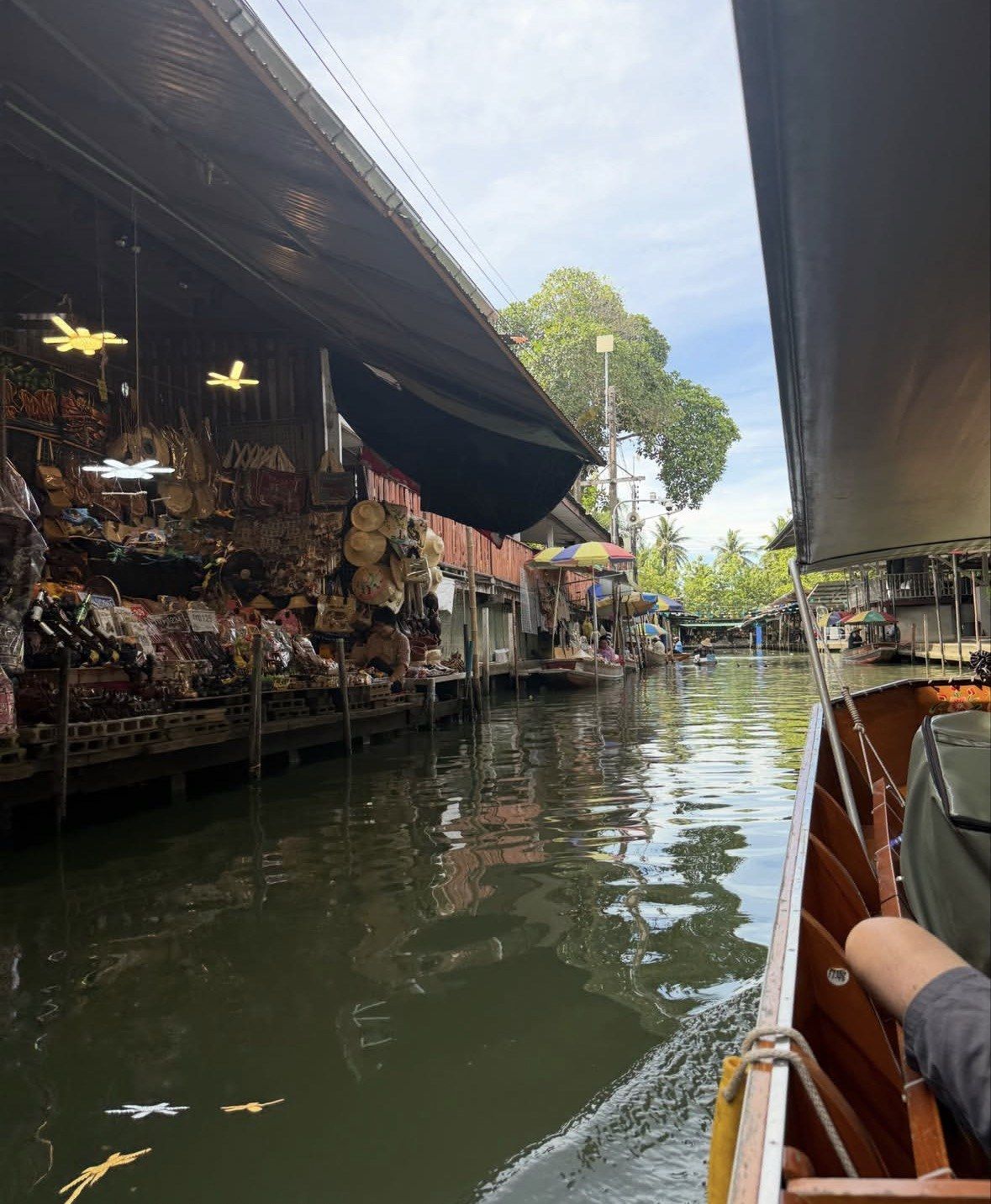
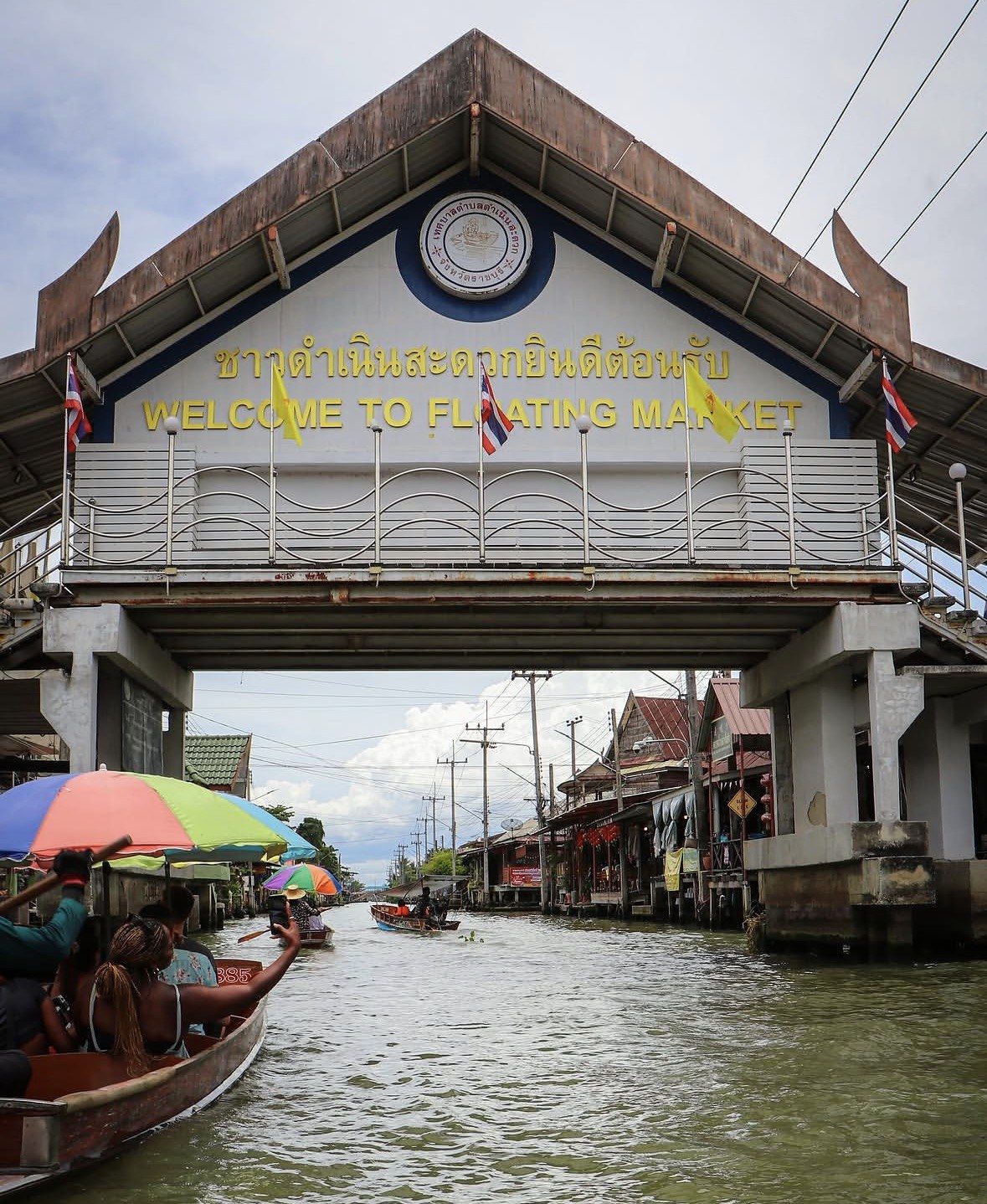
Damnoen Saduak is a morning in hard sun. The heavy trading runs from 07:00 to 09:00 and the main canal is clogged with tour-group boats by about 09:30, so you dress for two temperatures in one morning: cool enough at the pier to want sleeves, full sun by the time the boats stack up. Amphawa runs the opposite clock. Its own site gives 2 pm to 9 pm, which puts you beside the water into the evening, and that is when a thin long-sleeve shirt earns its place against the mosquitoes.
Think about how you will be sitting. Taling Chan's floating platform is a dining deck: grilled seafood, som tam and noodles come off boats moored alongside and you eat sitting on the ground. The tables along the canal at Khlong Lat Mayom are low as well. Stiff trousers or a tight skirt will have you shifting about by lunchtime.
- Loose long trousers, culottes or a maxi skirt: bearable in the humidity and accepted at a temple hall
- A t-shirt or any sleeved top, plus a thin long-sleeve layer for Amphawa after dark
- Fabric that dries fast rather than denim or heavy cotton
- A spare shirt in the day bag, above all from May to October
- Something you can sit on the floor or a low bench in
Shoes for wet boarding ramps and narrow walkways
Grip decides how getting into a boat goes. You step down off a pier edge or along a plank, the hull shifts when your weight lands on it, and the boards are already wet from whoever boarded before you. Sandals with a real sole work, and so do trainers you do not mind soaking. Leave heels and smooth soles at the hotel.
Slip-ons save time at the temple stop, since shoes come off before you walk into a temple hall. On land, the lanes beside the canal at Damnoen Saduak are narrow with sampans tied up along them, and the stretch around Amphawa's central bridge is shoulder to shoulder once the grilled-seafood boats start working. Footwear is not the only boarding problem: operators flag long-tail boats as awkward to climb into and out of for anyone with mobility trouble, so settle that question before the group commits to a canal circuit.
Sun, rain and the months that decide your layers
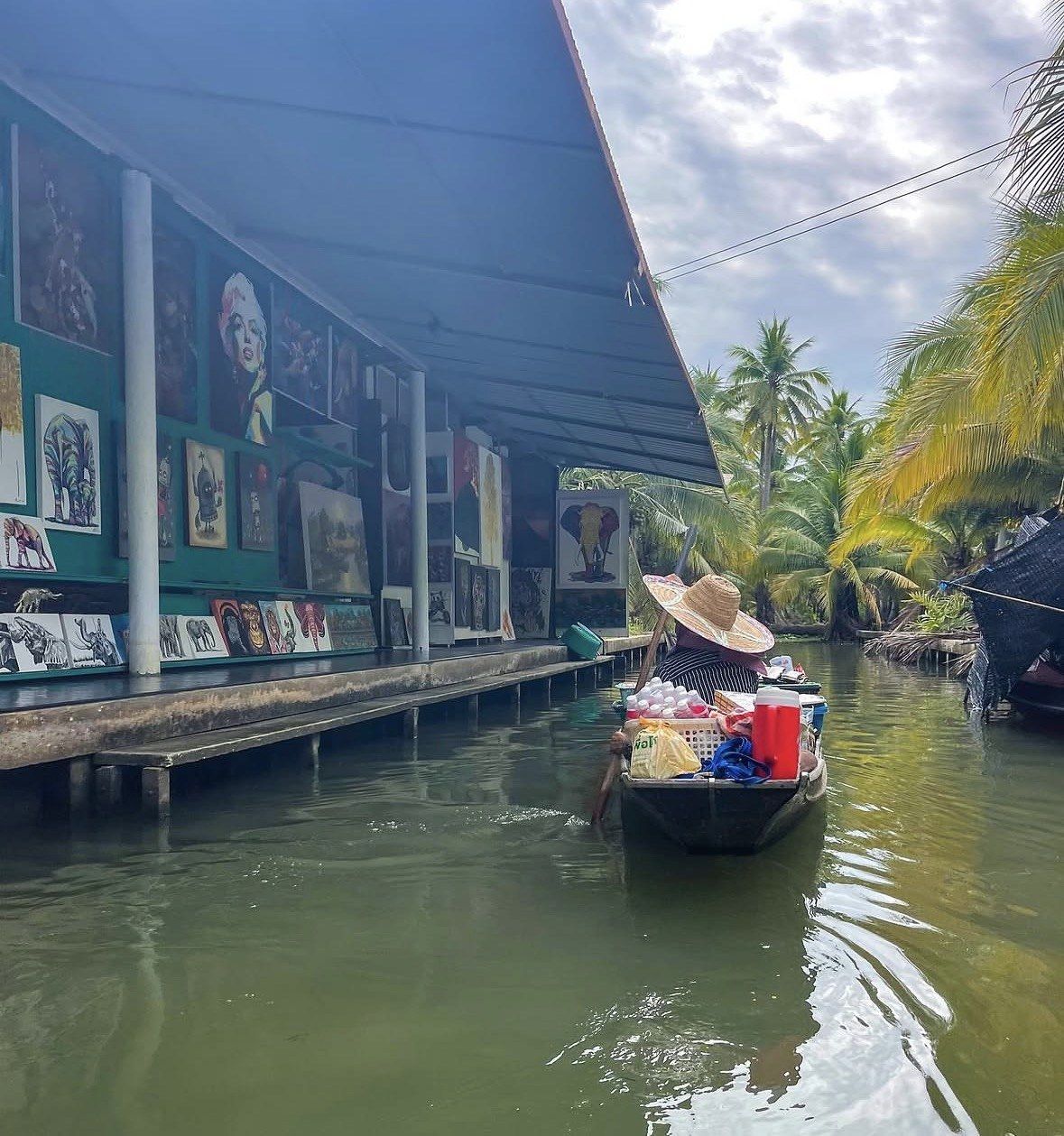
A brimmed hat and sunglasses do more for you on the water than extra sunscreen, because the sampans are open and the canal throws the light straight back at you. Bangkok's wetter season lasts 5.8 months, from 3 May to 28 October, when the chance of a wet day passes 36 percent, so across that half of the year a packable poncho stays in the bag whatever the morning looks like. In September, the wettest month, the average is 8.6 inches of rain spread over roughly 20 wet days, which is a month for shoes you can leave to dry overnight.
The dry months are the comfortable ones. November to March is the stretch Amphawa's own site points visitors to for cooler, less humid air, and with December averaging 0.9 wet days you can leave the rain layer out of the bag. Fireflies complicate the choice: at Amphawa they are usually a rainy-season sighting from May to October and never guaranteed, so the firefly window sits inside the sticky half of the year. Decide which of the two you came for before you book the month.
| When you go | What the weather does | What goes in the bag |
|---|
| November to March | Amphawa's own site recommends this stretch as cooler and less humid; December averages 0.9 wet days | Brimmed hat, sunglasses, light cover-up for the temple |
|---|
| 3 May to 28 October | Wet-day odds above 36 percent through Bangkok's wetter season | Packable poncho, dry bag or cover for phone and camera |
|---|
| August | All 31 days rated muggy or worse | Spare shirt, hand fan or cooling towel |
|---|
| September | About 20 wet days and an average of 8.6 inches of rain | Rain layer plus shoes that dry out |
|---|
An early start with the driving arranged
Rated 4.9 ★ (3750 reviews), Bangkok: Floating Market and Train Market Experience runs 8.5 hours from THB 792. An air-conditioned vehicle, a licensed English-speaking guide, a train ticket and a boat ride are included, so the pre-dawn pickup and the canal time are already covered. Bring water, sunscreen and small notes for the vendors.
★ 4.9/5 · 3,750 reviews
Covered shoulders and knees for the temple stops
Thai temple dress code asks for covered shoulders and knees. A t-shirt with long trousers clears it, and so do a maxi skirt or culottes. What gets stopped at the door: tank tops or spaghetti straps worn with nothing over them, short shorts, mini skirts and anything see-through, and the fix on the spot is a cover-up you rent or buy. A scarf or a thin shirt folded into the day bag settles it in ten seconds.
Market itineraries put real temples on the schedule, so dress for them from the start. Wat Bang Kung, reached from Amphawa across the Somdet Phra Sri Suriyendra bridge, receives visitors daily from 08:00 to 16:30, and its root-wrapped ordination hall has a single entrance, which is where the queue of people taking off their shoes forms. Phra Pathom Chedi asks for respectful attire, with the complex open daily from 7:00am to 8:00pm. Trips built around Amphawa routinely advise covering shoulders and knees, because the code there can be applied strictly.
- Works: t-shirt or sleeved top, long trousers, maxi skirt, culottes, slip-on shoes
- Does not work: uncovered tank tops or spaghetti straps, short shorts, mini skirts, see-through fabric
- Carry rather than wear: a scarf or light shirt for shoulders, for the days when a temple gets added
Going with children, strollers and limited mobility
A carrier beats a stroller on these canals. The walkways are narrow, pier steps are not level, and every boat means lifting a child in and out over moving water. Operators warn that the paddle boats at Damnoen Saduak do not carry life jackets small enough for very young children, and that adults stay responsible for children throughout, so with a toddler in the group plan on holding them for the whole circuit or treat the boat as optional.
Khlong Lat Mayom is the easiest of the four with small children or anyone who walks slowly. It trades Saturdays, Sundays and public holidays from 9:00 am to 5:00 pm, sits about 15 minutes from Bang Wa BTS station at 30/1 Bang Ramat Road, and its seven zones and 404 stalls spread over both sides of the road on flat ground, with the canal trip as an extra rather than the point of the visit. Sit down to eat in the 10am to 1pm stretch, because the seats go as lunchtime comes on and small children queue badly. There is an ATM near the main entrance and many stalls take cash only, so keep small notes for food and the toilets.
Timing is the other family question. Damnoen Saduak means being afloat by 07:30 after an hour and a half to two hours on the road, a dark start with young children, and the main canal is unusable by about 09:30. Taling Chan keeps weekend hours of roughly 08:30 to 16:00, with live Thai music from 11:00 to 14:00, so you can be back in the city before a nap is due. Amphawa suits households who would rather go out late than set a pre-dawn alarm, though its official hours of 2 pm to 9 pm and firefly boats after dark make a very long evening for anyone small.
What to bring to a floating market in Bangkok
Keep the bag small, because you carry it in a boat and between stalls. Water comes first: the heat holds all day through the wet season, and the Day Trip to Bangkok Floating Market & Maeklong Railway includes bottled water, one thing fewer to buy on the way. Insect repellent matters for Amphawa's late hours and for firefly trips in the rainy months, when the display sits on the immediate riverbank fringe among the mangrove trees along the Mae Klong.
Protect the electronics before you step onto a plank. A dry bag or a simple waterproof sleeve for a phone or camera costs nothing in space. Good practice on a firefly boat is a smaller, quieter boat, the engine cut near the trees and no flash, so plan on watching rather than photographing.
- Water, topped up before the drive out to Ratchaburi or Samut Songkhram
- Insect repellent for Amphawa's evening hours and for firefly boats between May and October
- A dry bag or waterproof cover for a phone or camera
- A hand fan or a cooling towel, which earns its place on an August market day
- Sunscreen, a brimmed hat and sunglasses for the open sampan
- A scarf or light shirt for shoulders at the temple hall
- Small notes, since many stalls at the city-edge markets take cash only
- Your own phone and headphones if your tour streams an audio guide
- A packable poncho from 3 May to 28 October
- A spare shirt and a plastic bag for the wet one
Questions people ask
What is the dress code for the temple stops on a floating market trip?
Shoulders and knees have to be covered. Acceptable: a t-shirt, long trousers, a maxi skirt, culottes. Refused: tank tops or spaghetti straps with nothing over them, short shorts, mini skirts, see-through fabric. Turn up short of the code and staff may point you to a cover-up to rent or buy. You also leave your shoes outside the hall, so wear something you can step out of without sitting down.
Can I wear shorts and flip-flops at the market itself?
Nobody at the stalls will mind, but two things will. Boarding ramps and boat decks are wet and smooth-soled sandals slide on them, and a temple hall later in the same itinerary will turn away bare knees. Wear something with grip and keep long trousers or a wrap in the bag.
Do I really need insect repellent?
Yes, if the day runs into the evening. Amphawa's official hours are 2 pm to 9 pm and you sit beside the water after dark, and firefly trips happen in the rainy months, roughly May to October, along the mangrove fringe of the Mae Klong. A morning at Damnoen Saduak, where the useful window falls between 07:00 and 09:30, matters much less.
How much rain should I plan for in the wet months?
From 3 May to 28 October the odds of a wet day run above 36 percent, and the September average is 8.6 inches over about 20 wet days. A packable poncho and a cover for your phone handle that. Early starts help as well, since the Damnoen Saduak morning is largely done by 09:30.
Read also